Warped or Soft Floors: Signs the Problem May Be Below the Surface
Water-damaged hardwood floors may be repairable when damage is limited and the subfloor is sound, but replacement is safer when boards, subfloor, or structure have lasting damage. HomeRemodelIssaquah.link checks the visible flooring and the layers below before recommending repair, hardwood replacement, laminate, or luxury vinyl plank installation.
Request an Estimate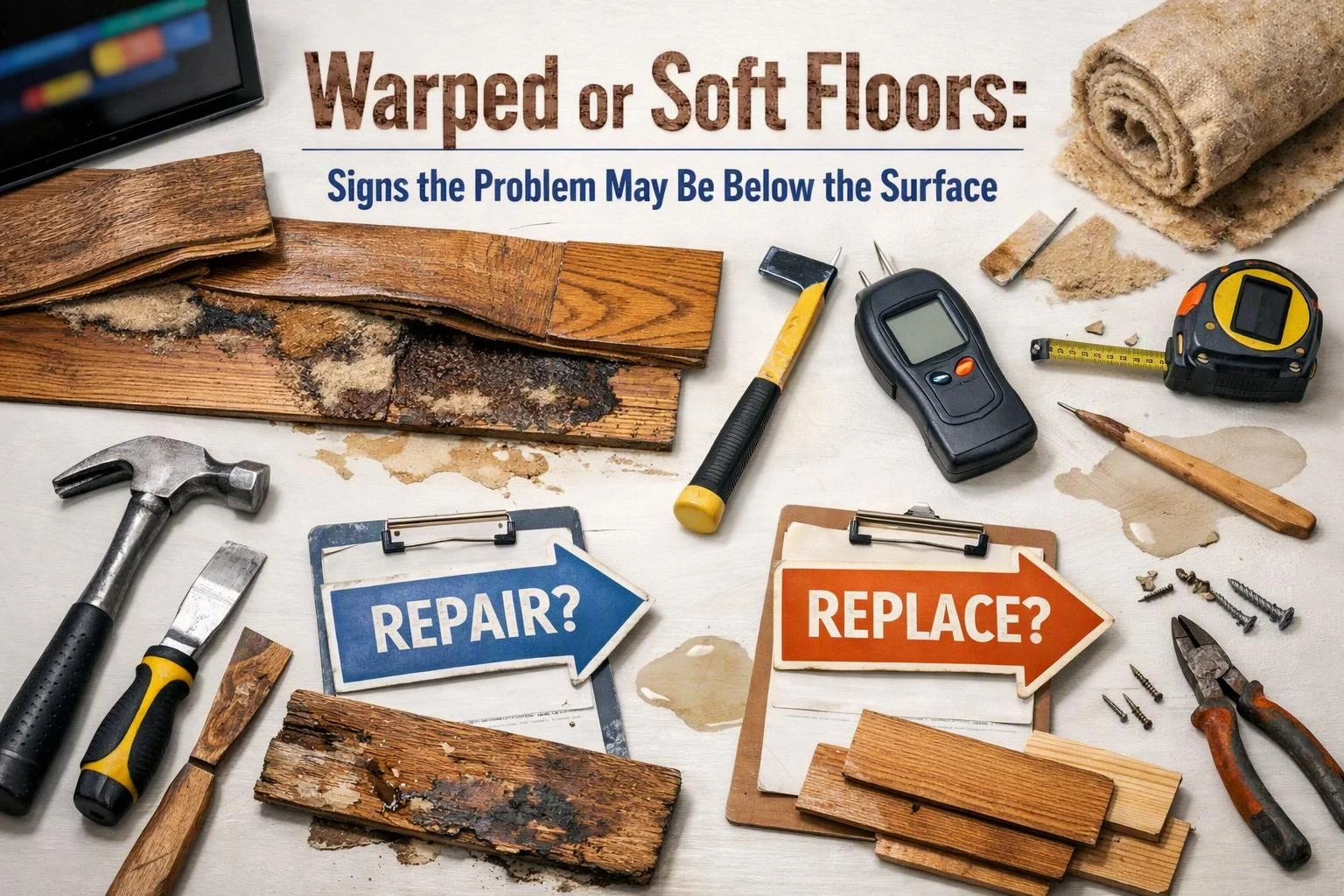
Water-damaged hardwood floors require an assessment to determine repair, drying, subfloor work, or flooring replacement. HomeRemodelIssaquah.link traces the moisture source and checks the floor structure before we choose a solution.
How Can You Tell When Floor Damage Is Below the Surface?
Soft, warped, or squeaky flooring can signal moisture or damage below the visible boards. Warped hardwood flooring may lift, cup, crown, or buckle as boards absorb moisture and lose their balance.
A soft spot can point to a weakened subfloor, underlayment, or floor support. Squeaks may come from subfloor movement, loose boards, or shifting fasteners.
We check how the floor moves under normal foot traffic and compare that movement with visible moisture damage. HomeRemodelIssaquah.link also looks for staining, odor, open joints, and signs that water reached the layers below.
Repair or Replace: What the Floor Condition Tells You
Hardwood floor repair fits limited, dry damage, while replacement becomes more suitable when boards or the layers below remain damaged. The moisture source must be controlled before either choice can last.
| Floor condition | Likely direction | What we check |
|---|---|---|
| Surface staining with firm, stable boards | Repair and refinishing may fit | Dryness, finish condition, and board stability |
| Several damaged boards with a sound subfloor | Board replacement may fit | Wood species, finish, and nearby transitions |
| Soft, swollen, or moving floor layers | Subfloor work or replacement is more suitable | Subfloor damage, trapped moisture, and floor support |
| Contaminated water affected porous materials | Removal and replacement may be needed | Water source, material condition, and safe removal needs |
We match the repair plan to the flooring material and the condition below it. Our team documents what can stay, what needs removal, and how the finished floor will meet nearby rooms.
Mistakes That Hide the Real Flooring Problem
Common flooring mistakes focus on the visible surface while leaving water damage below. A proper subfloor inspection connects the symptoms to the moisture source, floor structure, and repair-or-replace decision.
We look below the damaged hardwood flooring before covering, sanding, or replacing it. That approach helps prevent new materials from hiding trapped moisture or movement.
Mistake: Covering a Soft Spot Without Checking the Subfloor
A soft spot is an area that flexes under normal foot traffic. Moisture damage can weaken the subfloor and reduce floor support.
Covering the area may hide the symptom, but movement can damage the new flooring. We inspect the subfloor and surrounding structure before selecting a repair.
Mistake: Sanding Buckled Hardwood Before Finding the Water Source
Buckled hardwood rises or separates because boards absorb moisture and press against nearby boards. Floor sanding won't solve active moisture intrusion.
We locate the water source before planning surface work. If the boards remain swollen or unstable, our repair plan addresses the affected material and layers below.
Mistake: Replacing Boards While Leaving Wet Layers Below
Replacement boards can fail when a wet subfloor continues releasing moisture. Trapped moisture can affect the new boards, underlayment, and finish.
We check the layers below the damaged area before installing new material. Our flooring repair plan includes drying or subfloor work when the inspection calls for it.
Mistake: Treating Squeaks as Only a Noise Problem
Squeaky floors can point to loose boards, subfloor movement, or floor fasteners that no longer hold firmly. The sound may reveal movement between connected layers.
We trace the movement instead of masking the noise. Our crew checks board connections, subfloor contact, and support before choosing the fix.
Mistake: Ignoring Cupped or Crowned Hardwood Boards
Cupping curves board edges upward, while crowning raises the middle of a board. Both conditions can reflect a moisture imbalance.
We check moisture patterns across the room and below the boards. The repair decision depends on whether the boards can stabilize and whether the subfloor stayed sound.
Mistake: Painting or Sealing Over Moisture Damage
Floor sealant or painted flooring can cover stains without correcting moisture damage. Hidden deterioration may continue beneath the new coating.
We inspect the floor finish and the material below it before applying any new coating. Our team addresses the moisture source and damaged layers first.
Mistake: Matching New Boards Without Checking the Existing Floor
Hardwood board replacement needs more than a similar color. Wood species, grain, finish, plank width, and floor transitions affect the final match.
We compare the existing floor before selecting replacement boards. Our crew plans the repair so the new area connects cleanly with nearby flooring.
Mistake: Choosing New Flooring Before Checking Floor Height
Floor height affects door clearance, thresholds, and transitions between rooms. Hardwood flooring, laminate flooring, and luxury vinyl plank can use different layer systems.
We check the existing floor height before recommending a material. Our plan accounts for underlayment, cabinets, doors, and transition strips.
Mistake: Treating Every Water-Damaged Floor the Same Way
Clean water and contaminated water create different removal and material concerns. The flooring materials and subfloor condition also change the replacement decision.
We identify the water source and inspect the affected materials before planning removal. Our recommendation reflects the condition of the room, not only the visible stain.
What Our Flooring Assessment Checks
Our flooring assessment connects visible symptoms with the layers that support the finished floor. We use the findings to separate repairable damage from damage that needs replacement.
We record the condition before disturbing the floor. That helps our team plan demolition and floor preparation without removing sound material unnecessarily.
When Should You Call HomeRemodelIssaquah.link?
Call HomeRemodelIssaquah.link when visible floor damage comes with movement, moisture, or uncertain support. Our crew checks the flooring and the layers below before recommending work.
We can also assess the room when you aren't sure whether the damage is cosmetic. Early inspection helps define the needed repair without guessing from the surface.
Which Replacement Flooring Fits the Condition of the Room?
Hardwood flooring installation fits rooms where the subfloor is prepared and the material suits the room's use. Hardwood can preserve a connected look when the existing floor remains stable or can be properly replaced.
Laminate flooring installation can suit a room where appearance, wear needs, and floor height support that choice. We check moisture conditions and subfloor preparation before recommending laminate.
Luxury vinyl plank installation can fit rooms that need a resilient surface and a practical transition to nearby areas. We still inspect floor moisture and prepare the subfloor before installation.
Our hardwood flooring installation service planning considers room use, moisture exposure, door clearance, and floor transitions. The best material is the one that fits the prepared room and the condition below it.
How Does the Damage Change the Project Cost?
The project cost depends on the damaged area, material choice, subfloor work, removal needs, and related repairs. The moisture source and floor transitions can also change the work included.
Demolition may be limited when only a few boards are damaged. Broader removal can require more floor preparation, subfloor repair, drying, and replacement material.
We explain what the project quote covers, including removal, preparation, material installation, and transition work. Contact us for an exact quote after we assess the affected flooring.
How We Plan the Right Flooring Solution
Our plan starts with the floor condition and ends with a material choice that fits the room. We keep repair and replacement decisions tied to what the inspection finds.
HomeRemodelIssaquah.link keeps the recommendation practical and clear. Our team addresses the cause, the supporting layers, and the finished flooring as one project.
Questions About Water-Damaged Hardwood Floors
What does buckling hardwood flooring mean?
HomeRemodelIssaquah.link treats buckling hardwood flooring as a sign that boards absorbed moisture and pressed against nearby boards. We inspect the moisture source, board condition, and subfloor before deciding whether repair or replacement fits.
Can water-damaged hardwood floors be repaired?
Yes, water-damaged hardwood floors can be repaired when the damage is limited, dry, and supported by a sound subfloor. We replace damaged boards or repair the finish when the inspection shows that the surrounding floor remains stable.
What causes soft spots or squeaks in flooring?
Soft spots or squeaks can come from moisture damage, loose boards, subfloor movement, or weak floor support. We trace the movement and inspect the layers below before choosing a flooring repair.
When does water-damaged flooring need replacement?
Water-damaged flooring needs replacement when boards, subfloor, underlayment, or floor support remain swollen, soft, unstable, or contaminated. We recommend replacement when repair would leave damaged material or hidden moisture below the finished floor.
Water-damaged hardwood floors need a clear decision based on the boards, moisture source, subfloor, and floor structure. Contact HomeRemodelIssaquah.link for an assessment and a project quote that explains the needed repair or replacement work.