Bathroom Water Damage: Signs a Patch May Not Be Enough
Bathroom water damage needs more than a patch when soft floors, recurring grout cracks, stains, odors, or movement point to hidden damage. HomeRemodelIssaquah.link checks the affected area and plans the bathroom remodeling work needed to correct the source and damaged materials.
Request an Estimate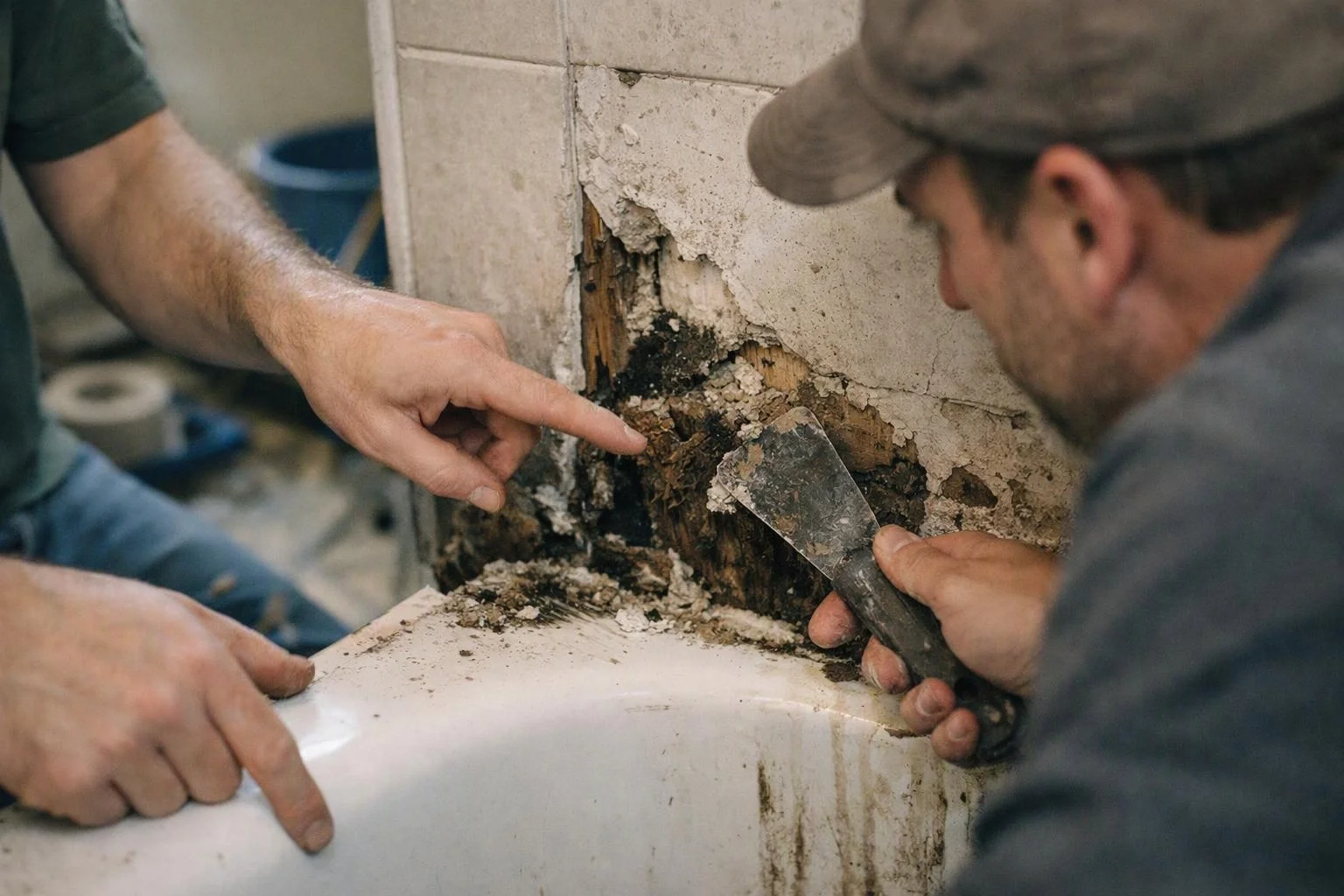
How to Tell When Bathroom Water Damage Is More Than Cosmetic
Bathroom water damage is more than cosmetic when moisture has reached flooring, drywall, framing, or other materials behind the visible surface.
Cosmetic damage stays on the finish, such as paint, caulk, or grout. Hidden damage can weaken the subfloor, swell wood, or support mold growth.
We trace the moisture source before choosing a repair. The source may be a plumbing connection, shower enclosure, shower pan, or failed caulk.
Bathroom Water Damage Signs That Need a Closer Look
Visible changes can show where moisture has moved, but they don't reveal the full repair scope. We inspect nearby materials when these signs appear.
Patch or Remodel? Compare the Damage Before Choosing a Fix
A surface patch fits limited finish damage when the material below is sound and the moisture source is corrected. A broader bathroom remodeling scope fits damage that reaches structure, repeated finishes, or concealed plumbing areas.
We compare the visible condition with the materials behind it before recommending the repair path.
| Condition | Likely scope | What we check |
|---|---|---|
| Finish-only mark with no active moisture | Surface patch | Drywall, paint, caulk, and nearby finishes |
| Limited damage near one fixture | Localized repair | The fixture, plumbing connection, wall, and floor edge |
| Soft flooring or spreading damage | Bathroom remodel | Subfloor, floor framing, underlayment, and finish materials |
| Ongoing moisture inside a wall | Repair with possible remodel work | Wall cavity, plumbing leak, drywall, and surrounding finishes |
Common Bathroom Water Damage Mistakes
Many water damage repair problems begin when a visible mark gets treated as the whole problem. A bathroom remodeling assessment looks past the finish and connects the damage to its source.
Our team checks moisture paths, damaged materials, and the condition of nearby fixtures. That approach helps keep a small repair from becoming repeated work.
Patching the Stain Without Finding the Moisture Source
A water stain can return when a plumbing leak, shower leak, or caulk failure continues behind the finish. Painting over the mark hides the warning without correcting the moisture source.
We locate the affected plumbing and inspect nearby materials before closing the area. The repair cost depends on access, demolition, damaged drywall, and the required finish work.
Covering a Soft or Spongy Bathroom Floor
A soft floor or spongy floor often means moisture has affected the subfloor or floor framing. Tile can stay in place while the surface below loses strength.
We check the flooring layers and remove damaged materials as needed. The repair scope depends on the damaged area, access, demolition, subfloor work, and replacement tile.
Replacing Cracked Grout Without Checking Tile Movement
Cracked grout can return when loose tile or tile movement allows the surface to flex. Water intrusion can then reach the tile underlayment and subfloor.
We check tile stability and the layers below before replacing grout. The cost depends on whether we need localized tile work, underlayment repair, or broader floor replacement.
Painting Over Peeling or Swollen Bathroom Walls
Peeling paint or swollen drywall can show moisture inside the wall cavity. Poor bathroom ventilation may add surface moisture, but a water stain can also point to a leak.
We identify whether the wall needs drying, drywall replacement, or plumbing repair before painting. The repair scope depends on demolition, wall access, source correction, and finish selection.
Replacing a Damaged Vanity Without Checking Behind It
A swollen cabinet can hide wall damage, a leaking supply line, or a failed drain connection. Installing a new bathroom vanity over wet materials can preserve the same problem.
We inspect the cabinet area, connections, wall, and floor before replacement. The cost depends on plumbing access, cabinet selection, wall repair, and finish installation.
Ignoring Musty Odors After the Surface Dries
A musty odor can remain when trapped moisture supports mold growth inside drywall or beneath the subfloor. A dry surface doesn't prove that concealed materials are dry.
We inspect odor sources and affected materials before planning the repair. The scope depends on the location of moisture, demolition needs, material replacement, and finish restoration.
Replacing Tile Before Checking the Underlying Surface
Bathroom tile can fail again when damaged underlayment, subfloor, or tile adhesive remains below it. New tile cannot correct movement or water damage in the supporting layers.
We assess the surface before selecting replacement tile and adhesive. The cost depends on demolition, subfloor condition, underlayment repair, tile choice, and installation details.
Treating Repeated Damage as a One-Time Repair
Recurring water damage often means a recurring leak, poor moisture control, or movement that remains unresolved. Repeated grout cracks and returning stains deserve a wider inspection.
We trace the pattern and connect it to the repair scope. A bathroom remodel may be appropriate when repeated work would leave damaged layers or failed finishes in place.
What Our Bathroom Remodeling Assessment Covers
Our bathroom remodeling assessment connects the visible damage with the materials and fixtures that may be affected. We use the findings to define a practical repair or remodel scope.
What Changes the Cost of Repairing Bathroom Water Damage
Bathroom water damage repair cost depends on the moisture source, damaged materials, access, demolition, and the finishes selected for the remodel.
Damage extent affects how much material must be removed and replaced. Subfloor replacement, drywall replacement, and fixture relocation can also expand the work.
Finish selection affects the final scope because tile, cabinetry, fixtures, trim, and waterproofing systems vary. We provide an exact quote after reviewing the area and defining the repair scope.
When to Call HomeRemodelIssaquah.link Instead of Patching the Area
Call us when visible damage may involve hidden materials or an active moisture source. Our team can assess the condition and explain the bathroom remodeling scope.
How HomeRemodelIssaquah.link Plans the Right Bathroom Repair or Remodel
HomeRemodelIssaquah.link plans bathroom remodeling by tracing the moisture source and defining the repair scope before finish installation. We connect the inspection findings to the work needed in the room.
Our bathroom remodeler team reviews access, demolition, plumbing fixtures, structural layers, and finish materials. We also coordinate work that requires licensed trade handling and follow applicable code and inspection requirements.
For a broader service overview, see our Bathroom remodeler service page.
Connect the Water Damage Assessment to Your Bathroom Remodel
Bathroom Remodeling can correct damaged layers while updating the room's function and finish. The right scope depends on what the assessment finds behind the visible surface.
We can connect moisture correction, material replacement, fixture planning, and finish installation into one clear plan. Contact us to discuss the affected area and request a quote from HomeRemodelIssaquah.link.
Get a Free EstimateQuestions About Bathroom Water Damage Repairs
Why does bathroom grout keep cracking after repair?
Bathroom grout keeps cracking when tile movement, damaged underlayment, or moisture intrusion remains below the repair. HomeRemodelIssaquah.link checks the tile and supporting layers before planning new grout or related bathroom remodeling work.
Can a bathroom water stain dry without fixing the leak?
Yes, a bathroom water stain can dry while the plumbing leak or shower leak continues behind the surface. We trace the moisture source and check nearby drywall, flooring, and framing before repairing the finish.
What should I check behind a swollen bathroom vanity?
A swollen bathroom vanity calls for a check of the supply line, drain connection, wall, floor, and nearby cabinet materials. We inspect those areas and define the repair scope before installing replacement cabinetry.
Can loose bathroom tile indicate subfloor damage?
Yes, loose bathroom tile can indicate subfloor damage, failed underlayment, tile movement, or weakened adhesive. We inspect the layers below the tile before selecting a localized repair or broader remodel scope.