Bathroom Mildew That Keeps Returning: What to Check Before Remodeling
Recurring bathroom mildew keeps coming back when moisture stays trapped, ventilation is weak, leaks remain, or damp materials were never corrected. HomeRemodelIssaquah.link checks the moisture source, airflow, surfaces, and remodel plan before work begins.
Request an EstimateWhy Bathroom Mildew Keeps Coming Back
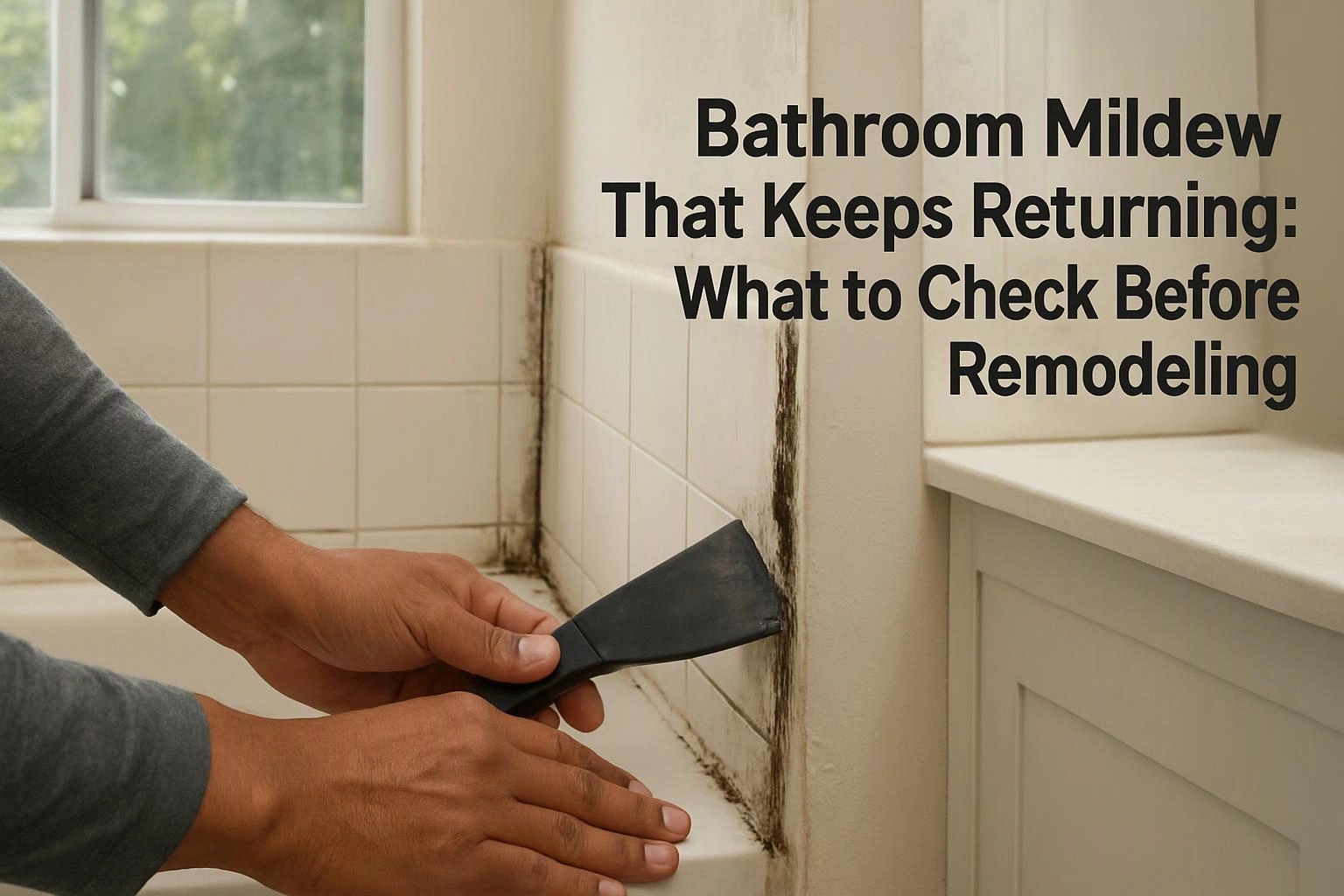
Recurring bathroom mildew usually means the moisture source remains after surface cleaning. Humidity can stay trapped when bathroom ventilation is weak, the exhaust fan does not move enough air, or the vent duct ends in the wrong place.
A musty smell can point to hidden moisture behind finishes, under flooring, or near plumbing connections. We trace the odor, inspect visible clues, and plan repairs before new materials cover the problem.
HomeRemodelIssaquah.link checks moisture conditions, airflow, and likely leak areas as part of a bathroom remodeling plan.
Compare the Moisture Clues Before You Remodel
Different mildew patterns point to different moisture sources. The table below helps connect visible clues with the checks our team uses during planning.
One clue can have more than one cause, so we inspect the surrounding materials before choosing a repair.
| Clue | Possible cause | What we check | Remodeling concern |
|---|---|---|---|
| Mildew pattern | Repeated surface moisture or poor airflow | Room airflow and nearby surfaces | New finishes may fail again |
| Peeling paint | Humidity, leaks, or wet wall materials | Wall condition and moisture path | Wall repair may expand the scope |
| Musty odor | Hidden damp materials or a hidden leak | Walls, floors, cabinets, and plumbing areas | Damp materials may need removal |
| Condensation | Warm humid air meeting cold surfaces | Airflow, surface conditions, and enclosure design | The design may need better moisture control |
| Water staining | Plumbing leak or water intrusion | Supply lines, drain connections, and shower valve | Repairs may come before cosmetic work |
| Weak exhaust fan | Blocked duct, poor termination, or weak airflow | Fan operation, vent duct, and termination | Ventilation work may affect the remodel plan |
| Wet building materials | Long-term moisture exposure | Drywall, tile backer, and subfloor | Replacement may be needed before finishes |
Mistake 1: Treating Surface Mildew Without Finding the Moisture Source
Surface mildew returns when cleaning removes visible growth but leaves the moisture source active. Recurring growth can come from humidity, condensation, or a leak behind the finish.
Cleaning alone keeps the immediate repair small, but repeated remediation can add work and material costs over time. We identify the moisture source and include the needed correction in the remodel scope.
Mistake 2: Assuming the Exhaust Fan Provides Enough Ventilation
A bathroom exhaust fan may run while moving too little air through the room. A blocked vent duct, poor vent termination, or damaged connection can limit humidity removal.
Replacing or correcting ventilation can change the project scope because duct access and electrical connections may need review. We test airflow, inspect the vent path, and coordinate regulated electrical work safely.
Mistake 3: Ignoring Peeling Paint and Soft Wall Areas
Peeling paint and soft drywall show that wall materials may have absorbed moisture. Wallboard can lose strength when wet, even when the surface looks mostly intact.
Leaving damaged material in place can add repair costs after the remodel starts. We inspect the soft wall area, remove affected material when needed, and prepare a sound surface for finishing.
Mistake 4: Missing a Plumbing Leak Behind the Bathroom Finish
A plumbing leak behind bathroom finish can sustain mildew even when ventilation works well. Supply lines, drain connections, and a shower valve can all create hidden moisture.
Leak repairs can expand the project because damaged wall or floor materials may need removal. We inspect accessible plumbing areas and coordinate required plumbing work before closing the wall.
Mistake 5: Remodeling Over Damp or Contaminated Materials
Damp drywall, subfloor, and tile backer can hold moisture below new finishes. Contaminated materials can also spread the problem into the remodeled area.
Demolition and replacement add material and labor needs to the project scope. We expose affected areas as needed, remove unsuitable materials, and install appropriate replacements before finishing.
Mistake 6: Sealing the Bathroom Before Improving Airflow
New caulk, grout, and waterproofing cannot correct poor airflow by themselves. A tightly sealed bathroom enclosure can still collect condensation when humid air has nowhere to go.
Adding airflow work after finishes are installed can require removal and replacement. We review ventilation before sealing the enclosure and connect waterproofing choices to the moisture-control plan.
Mistake 7: Overlooking Cold Surfaces and Condensation
Condensation forms when humid air meets a cold wall, mirror, or tile surface. Repeated moisture on those surfaces can support condensation mildew.
Correcting the issue later can affect finish selection and enclosure details. We review thermal conditions, airflow, and humidity patterns before choosing the repair approach.
Mistake 8: Choosing New Finishes Before Planning Moisture Control
Bathroom finishes perform best when the moisture-control plan comes first. Tile, paint, and a shower enclosure must suit the room's airflow and water exposure.
Changing finishes after demolition can increase the project scope and material needs. We build moisture control into the remodel design before selecting final surfaces.
What We Check Before Bathroom Remodeling
Our pre-remodel review connects the visible mildew problem to the work behind the finish. Each check helps define a clear remodel scope and prevents avoidable rework.
HomeRemodelIssaquah.link uses the findings to explain the repair path and prepare the estimate.
When to Call HomeRemodelIssaquah.link
Call HomeRemodelIssaquah.link when recurring mildew may involve hidden water damage or work beyond safe surface cleaning. Our crew can plan the remodel around the cause and identify work that needs licensed handling.
Some bathroom checks involve ladders, electrical ventilation, plumbing, or concealed materials. Use the situations below to decide when our team should take over.
Should Moisture Problems Be Fixed Before Remodeling?
Yes, moisture problems should be identified and corrected before new bathroom finishes are installed. New tile, paint, grout, or caulk cannot stop an active leak or remove damp materials.
We place demolition, moisture repair, waterproofing, and ventilation upgrades in the right order. The remodel estimate reflects the actual conditions found behind and below the visible finishes.
Plan a Bathroom Remodel Around the Cause
Bathroom remodeling works best when moisture control guides the design from the start. Our team connects ventilation improvement, waterproofing, finish selection, and the condition of the existing materials.
We can also explain whether the problem resembles the issues covered in Bathroom Water Damage: Signs a Patch May Not Be Enough. If you need broader planning help, our Bathroom Remodeling service covers the work needed to create a durable plan.
Contact us with the mildew pattern, musty odor, visible stains, or remodeling goals. We will review the cause, define the scope, and prepare the next step for your bathroom project.
Get a Free EstimateQuestions About Returning Bathroom Mildew
What does a persistent musty bathroom smell mean?
A persistent musty bathroom smell often means damp materials or hidden moisture remain in the room. HomeRemodelIssaquah.link traces the odor through accessible walls, floors, plumbing areas, and ventilation paths before remodeling begins.
Can bathroom mildew return after the visible growth is cleaned?
Yes, bathroom mildew can return when the moisture source remains active. Cleaning removes visible growth, but we also check humidity, airflow, leaks, and damp building materials.
Can a bathroom exhaust fan cause mildew if the vent duct is blocked?
Yes, a blocked vent duct can keep humid air inside and support recurring mildew. We inspect the exhaust fan, airflow, duct path, and vent termination before recommending ventilation work.